Washington, D.C.
In what observers are calling one of the darkest days in modern U.S. history, coordinated outbreaks of violence between National Guard units and civilian demonstrators on Saturday left thousands dead and many more injured across multiple American cities. The event, now being referred to as the “No Kings Massacre,” has plunged the nation into a state of mourning and uncertainty.
Preliminary casualty reports compiled from emergency management agencies estimate that over 4,200 people were killed and more than 9,500 injured in confrontations spanning at least 16 major metropolitan areas, including Washington D.C., New York, Chicago, Austin, and Los Angeles. Local hospitals have been overwhelmed, and some have converted parking structures into makeshift triage centers.
Authorities have described the protests as part of a loosely coordinated “No Kings” movement, named for a slogan that gained traction online calling for an end to authoritarian leadership and expanded civil protections. Demonstrations had been largely peaceful throughout the week, until tensions escalated following the deployment of National Guard troops to several state capitals.
Videos posted to social media appear to show Guard units firing into crowds after orders to disperse were ignored. In other locations, footage depicts armed civilians clashing with both demonstrators and law enforcement. Independent verification of these recordings has been limited due to widespread cellular and internet outages reported shortly after 5 p.m. Eastern Time.
“This was a tragedy on a scale we never imagined possible inside our own borders,” stated an anonymous Democratic congresswoman. “Many of the victims were unarmed and caught between crossfires. Hospitals are still processing the injured as we speak.”
Federal Response and Martial Law Declaration
Late Saturday night, President Donald J. Trump addressed the nation from the White House, calling the events an “unprovoked rebellion orchestrated by far-left extremists.” He vowed to “restore order in every American city under siege” and announced plans to implement martial law in all municipalities deemed “disloyal and un-American.”
“The enemies of freedom, whether they call themselves Democrats, Antifa, or something else, will be dealt with swiftly and decisively,” the president declared during a nationally broadcast address. “We are a nation of law, not of kings. And no mob, no movement, will overthrow that.”
The Department of Defense confirmed the mobilization of additional National Guard units from neighboring states, as well as the authorization for federal forces to assume policing duties in cities under emergency declarations. By Sunday morning, curfews were in effect in 23 states.
Political and Public Reaction
Reactions from state and local officials have been mixed. Governors in California, Illinois, and New York condemned the federal response as “reckless and unconstitutional,” while others expressed support for restoring public order “by any means necessary.”
“Americans deserve answers,” said Senator Alex Padilla (D-CA) during a press briefing early Sunday. “This was not a war zone; these were citizens exercising their rights. We cannot allow political disagreements to become death sentences.”
Republican leaders, meanwhile, echoed the administration’s position that the protests were infiltrated by violent agitators. Senator Ted Cruz (R-TX) said the events underscored “the need to root out domestic terrorism at its ideological core.”
Human rights organizations have already begun documenting what they describe as “systematic abuses of force” and have called for an international investigation. Amnesty Global issued a statement saying it had received reports of unarmed protesters being shot at close range and others detained without charge.
Eyewitness Accounts
In downtown Chicago, residents described a scene of chaos as armored vehicles advanced on a crowd gathered outside the statehouse. “At first, it was just tear gas,” said college student Daren Henderson. “Then we heard gunfire. People were screaming, running in every direction. You could see bodies on the ground.”
In Los Angeles, an aerial video broadcast by a local news helicopter showed what appeared to be hundreds of protesters scattering as flares lit up the night sky. Emergency responders were seen struggling to reach wounded civilians due to blocked intersections and fires spreading through nearby commercial districts.
Similar reports of panic and bloodshed emerged from Atlanta and Philadelphia, where several downtown buildings were heavily damaged in the ensuing unrest. Despite official curfews, demonstrations have continued in some areas, with groups holding candlelight vigils for victims.
Uncertain Future
As Sunday dawned, the streets of many U.S. cities remained eerily quiet. National Guard checkpoints dotted major intersections, and armored vehicles patrolled key infrastructure points. The Federal Communications Commission confirmed that mobile networks and social media platforms were operating under temporary restrictions “to prevent the spread of misinformation.”
Legal scholars warn that the invocation of martial law across such a broad swath of the country could face immediate constitutional challenges. “The implications of this move are enormous,” said Randy E. Barnett, professor of constitutional law at Georgetown University. “The balance between national security and civil liberty has never been under greater strain.”
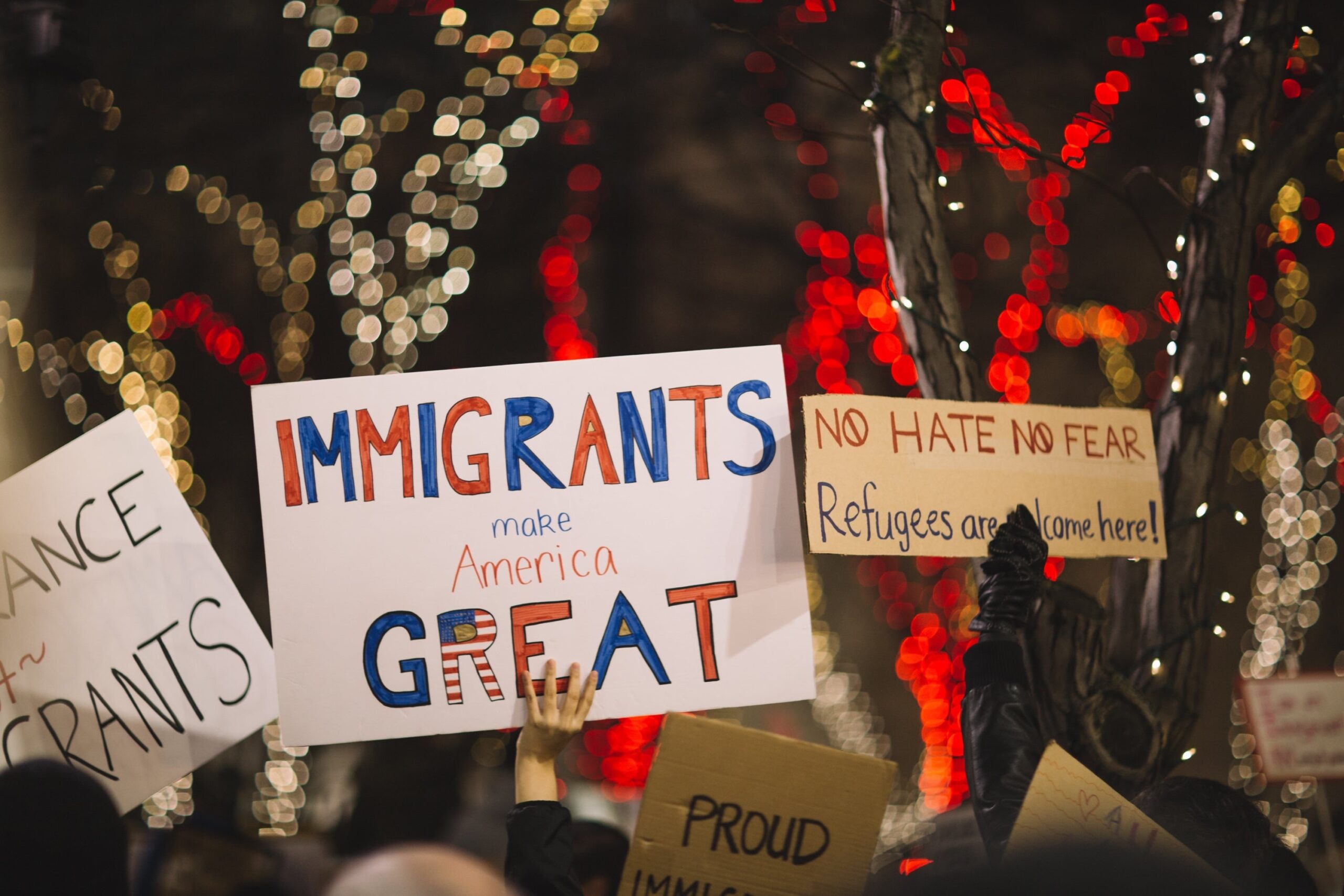
Across the nation, families are still searching for missing loved ones. Memorials have sprung up at city halls and public squares, adorned with candles, flags, and handwritten signs reading “No Kings, No Masters! Only Freedom.”
For now, America waits… grieving, divided, and uncertain what comes next.